News
King Oyster Mushroom Spawn Production
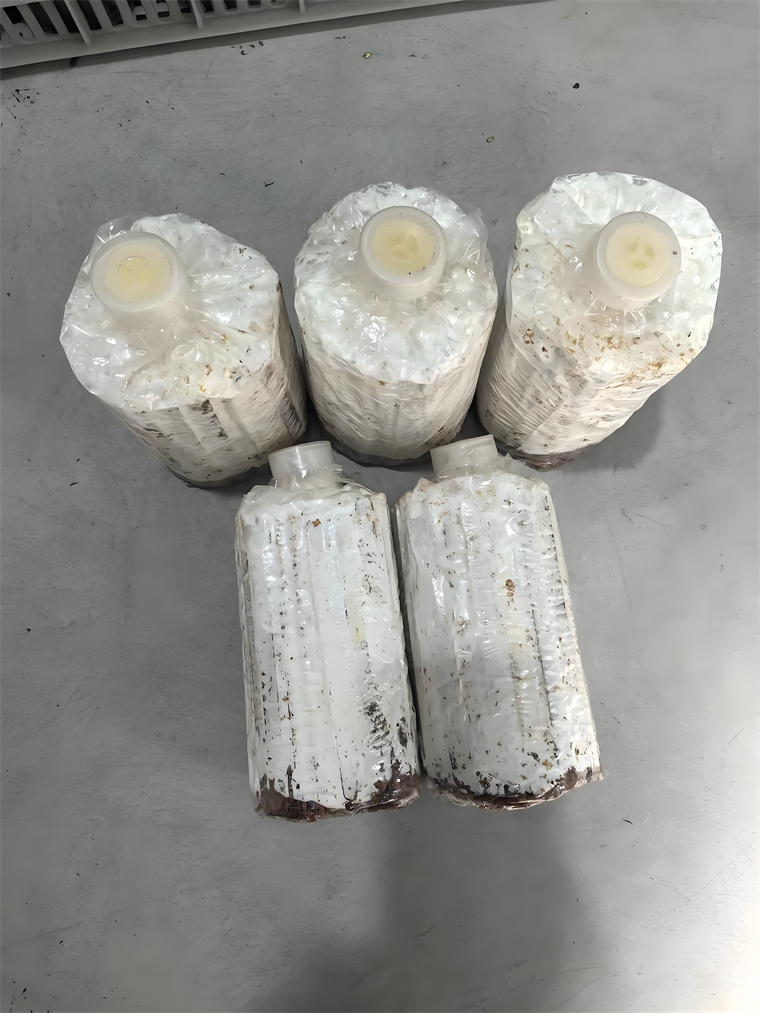
1. Concept and Advantages of Spawn Propagation
Spawn propagation refers to edible mushroom spawn made using bamboo skewers, wooden sticks, popsicle sticks,
etc. It is typically used to produce tertiary spawn. Common varieties such as oyster mushrooms, enoki mushrooms,
and king oyster mushrooms can all use spawn propagation. Spawn propagation improves inoculation efficiency,
offering advantages such as rapid germination, convenient inoculation, and speed. During inoculation, simply use
sterile forceps to pick up a stalk and insert it into the center of the culture medium. The operation is convenient
and simple, reducing the chance of contamination (it does not require opening the entire bag, minimizing exposure
time to the culture medium). After inoculation, the stalk can penetrate deep into the culture medium, with the spawn
germinating from multiple points (top, middle, and bottom). The mycelium spreads radially from the inside out,
generally filling the bottle/bag 5-7 days earlier, improving fruiting synchronization. Spawn propagation requires
higher technical skills and generally employs high-pressure sterilization.
2. Steps for Producing King Oyster Mushroom Branches
Selecting seed trees → Soaking and boiling branches → Preparing auxiliary materials → Filling and bottling →
Sterilization → Inoculation → Cultivation
(1) Selecting Superior Seed Trees
Select trees with abundant sapwood, little heartwood, thick bark, rich nutrition, and a tight bond between phloem
and xylem, such as oak, chestnut, sycamore, and poplar. Trees should be 15-20 years old, with a diameter of 12-18 cm.
The best time to cut the trees is from early winter when the leaves fall until the following year when buds sprout.
After cutting, split the branches and cut them into long strips with one pointed end and one flat end, then sun-dry
or oven-dry. The length of the branches depends on the size of the seed tree and the cultivation bag (bottle), generally
7mm × 7mm × (120-165)mm. In production, given the limitations of conventional tree branch applications, we can also
use disposable chopsticks and popsicle sticks for branch production. Generally, disposable chopsticks are cut into 15cm
long sections, and popsicle sticks are used directly.
(2) Branch Soaking and Boiling
① Soaking Method: Place the purchased bundles of branches in a plastic basket and soak them in a large basin of lime
water with a pH of 10. Then, press them down with a heavy object and add water until the branches are submerged by
10cm. Generally, after soaking for 24 hours, check if the branches are thoroughly soaked. The method is to use a hammer
to break open the soaked branches and check if there is a white core. If there is, continue soaking; if not, it means they
are thoroughly soaked. In cold seasons, the soaking time needs to be extended to 36 hours to achieve a water content
of 60%. If this requirement is not met, boil the branches to replenish the water. After the water content reaches the standard,
remove the covering, use a plastic basket to remove the branches, drain them, and prepare for mixing and bagging (bottling).
② Boiling Method: First, pour the measured water into a large pot. Then, dissolve sucrose, potassium dihydrogen phosphate,
and magnesium sulfate (formula: 100kg water + 1kg sucrose, 0.3kg potassium dihydrogen phosphate, 0.15kg magnesium sulfate)
in the water. Pour the branches into the pot and heat to a boil for 30-40 minutes. Randomly remove several branches from the pot
and use a knife to longitudinally cut them to check their absorption of the nutrient solution. Boil until the branches no longer have
a white core, then remove them and rinse them with water.
(3) Prepare the auxiliary material and mix the branches and auxiliary material evenly.
The auxiliary material is mainly used to fill the gaps between the trees to supplement nutrients and facilitate mycelial colonization.
The amount added should be 30%. Auxiliary material ratio: cottonseed hulls (sawdust) 78%, wheat bran 20%, gypsum 1%, lime 1%
(the amount of lime should be adjustedaccording to the actual situation). Cottonseed hulls should be pre-wetted, and the mixture
should be evenly applied, with a moisture content of 60%–65% and a pH of 8.0–9.0. Before bagging (bottling), the branches and
auxiliary materials should be mixed thoroughly, ensuring that the auxiliary materials adhere to the surface of the branches.
(4) Bagging and Bottlening
Calculate the number of branches to be purchased based on the number of cultivation bags produced daily. Different manufacturers
choose different containers for preparing the branch spawn; some use long spawn bottles, while others use polypropylene plastic bags.
① Bagging
Select 17cm×33cm polypropylene plastic bags with a thickness of 0.005–0.007cm (not less than 0.005cm). Each bag should contain
90–100 branches. To prevent infection, an additional plastic bag can be added outside the spawn bag. When bagging, mix the branches
with a small amount of auxiliary material to coat them, then place them in a bag with a small amount (2cm thick) of auxiliary material
at the bottom. Fill the bag with auxiliary material around the edges, and then cover the branches with a small amount of auxiliary material,
just enough to cover them. This is also called "bridging". When the bag is about 70-80% full, put on a neck ring, plug it with cotton or
plastic stoppers, and put it in a basket for sterilization.
② Bottle filling.
Place the branches upright with the tips facing down into 750ml canning jars. Place some crushed culture medium on the surface of the
branches to fill the gaps. Generally, one jar can hold 80-90 branches. Wash the jar body, mouth, and inner wall of the mouth with clean
water. Place newspaper on the outside and film on the inside of the mouth, and tie it with a rubber ring.
(5) Sterilization
Sterilize at normal pressure at 100℃ for 15 hours, or autoclave at 126℃ for 2 hours. To determine if sterilization is complete, observe whether
the sap that "spits out" the primordia before their formation is white. White sap indicates thorough sterilization; yellow sap indicates incomplete
sterilization, which may lead to Trichoderma infection.
(6) Inoculation
Once the substrate temperature drops below 25℃, inoculate using aseptic techniques. One mother culture can inoculate 5 bags.
(7) Cultivation
Dark light, temperature 20-25℃, moderate ventilation, and 60%-65% relative humidity. Due to the good permeability of the branch culture medium,
mycelial growth is rapid, shortening the cultivation time by 5-7 days compared to conventional primary cultures, thus reducing the mycelial age.



 Send Email
 WhatsApp