News
Cultivation Process and Methods for King Oyster Mushrooms
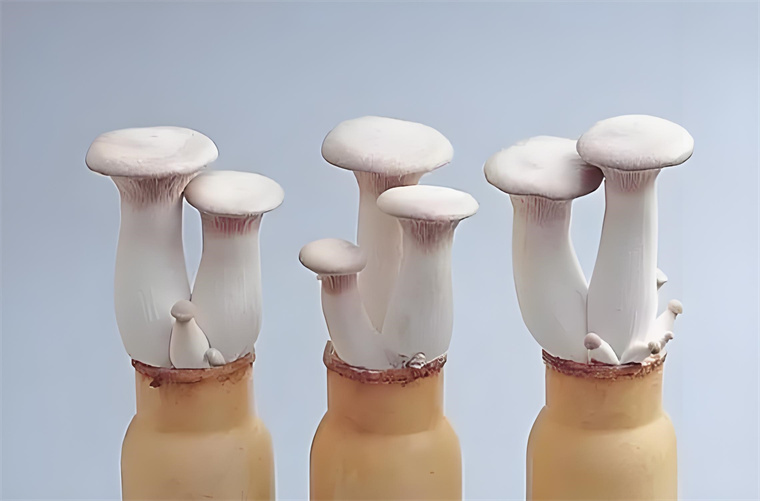
Preparation of materials and spawn, greenhouse setup, etc. → Mixing substrate, bagging (or bottling), sterilization → Cooling, inoculation → Mycelial growth management → Fruiting management
Cultivation Methods
Cultivation methods are categorized by the container used: bottle cultivation and plastic bag cultivation. Bottle cultivation is suitable for industrialized production, while plastic bag cultivation has the widest range of applications. Plastic bag cultivation can be further classified by bag arrangement: wall-style stacking, upright placement, or vertical cultivation using mesh racks. It can also be categorized based on whether casing soil is applied. Since bottle and bag cultivation share many similarities, the following description focuses primarily on bag cultivation.
(1) Greenhouse Fruiting
When the practice was first introduced, some growers would remove the plastic bags once the mycelium had fully colonized the substrate, peel off the outer mycelial skin, and stack the logs into "walls" 6–8 layers high, allowing mushrooms to fruit from both ends. Alternatively, the logs could be placed upright in planting beds with 2 cm of spacing between them, immediately covered with casing soil, and watered with clean water just enough to saturate the soil. While greenhouse cultivation yields a certain output, the difficulty in controlling conditions such as temperature, humidity, and light limits both yield and quality.
(2) Industrialized Vertical Fruiting
Domestic bag cultivation primarily employs the mesh rack method, a model that has become increasingly refined, mature, and stable. Compared to plastic bags, bottle cultivation requires a higher initial investment due to the cost of the bottles. However, from an industrial perspective, bottles offer several advantages: they are reusable; filling them does not require neck rings, making them highly suitable for mechanized operations and labor savings; their stability facilitates mechanized inoculation and surface scratching; and removing spent substrate is quick and efficient.



 Send Email
 WhatsApp