News
Environmental Growth Requirements of Pleurotus eryngii
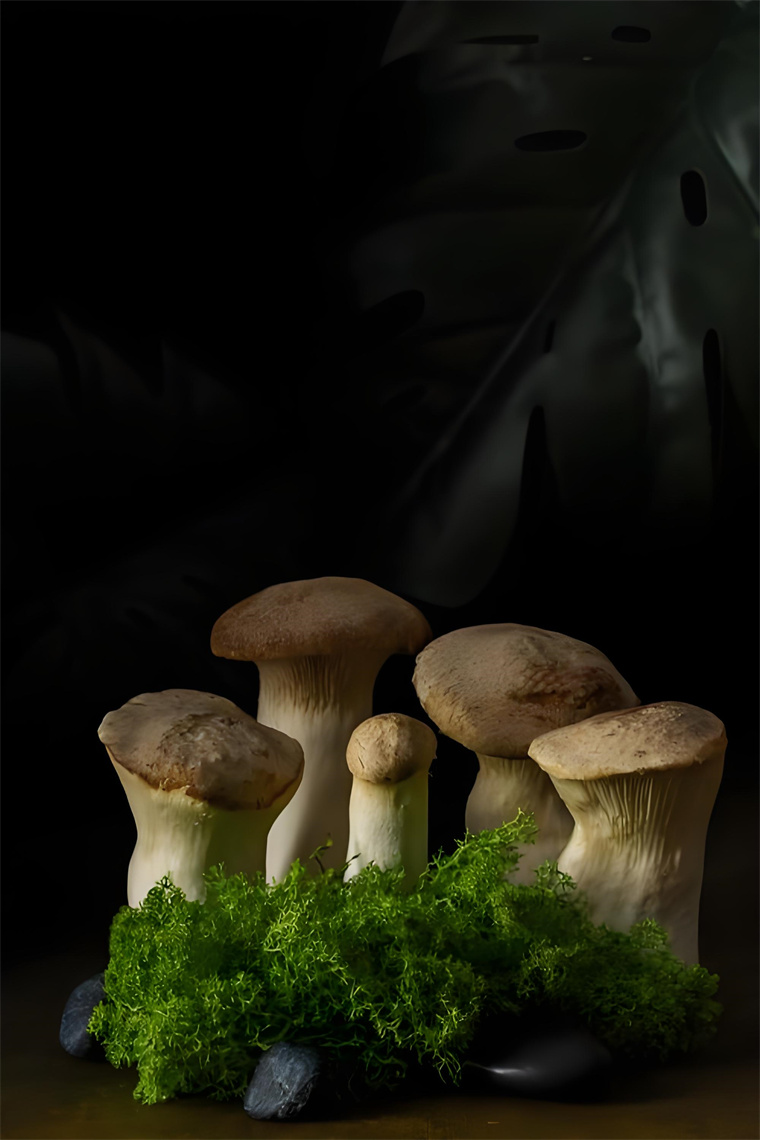
1. **Temperature**
Pleurotus eryngii is a thermophilic fungus that needs proper low temperature to form primordia. Its mycelium can grow at 3–35℃, and the most suitable temperature is 23–26℃. The optimal temperature for primordia formation is 10–15℃. The fruiting body development temperature varies by strain, mostly between 10–20℃, with the ideal range of 12–18℃. Primordia cannot form below 8℃; temperatures above 20℃ easily cause malformed fruiting bodies, raise disease incidence and lead to mushroom withering and rot. Pleurotus eryngii has a narrow suitable fruiting temperature range, so choosing a proper cultivation season and maintaining stable environmental temperature in the fruiting house are essential for successful planting.
2. **Humidity**
Pleurotus eryngii features strong drought resistance, while proper humidity benefits its growth and increases yield. During mycelium growth period, the ideal water content of cultivation substrate is 60%. Since direct water spraying on fruiting bodies is forbidden in cultivation, and mushrooms mainly absorb moisture from substrates, the substrate water content can be properly adjusted to 65%. It is wrong to think that higher substrate moisture brings higher yield and better second flush harvest. Excessively high moisture will slow down mycelium growth, result in weak mycelium development and low output, and easily cause large-area miscellaneous bacteria infection on fungus bags during spawn running and fruiting. Hence substrate moisture must be kept moderate. The suitable air relative humidity is 60% for mycelium growth, and 85%–90% for fruiting body development. Raise air humidity by water spraying to keep mushroom surface moist and reduce pileus cracking. Supply moisture mainly via culture medium instead of spraying water directly on mushrooms, otherwise mushrooms will turn yellow or even die.
3. **Ventilation & Gas**
Pleurotus eryngii has low oxygen demand in the mycelium stage, and low carbon dioxide concentration can boost mycelial growth. With mycelium spreading, the carbon dioxide concentration inside fungus bags or bottles can rise from 0.03% (normal atmospheric level) to 2%, and mycelium still grows well with moderate ventilation. Sufficient oxygen is required in the primordia formation stage, and carbon dioxide concentration shall be controlled below 0.5%. Insufficient oxygen will slow down mushroom bud formation and cause deformed mushrooms and surface nodules. Fresh air circulation is necessary during fruiting growth, with carbon dioxide concentration preferably under 0.4%. When mushroom buds grow to 5 cm in length, properly raising carbon dioxide concentration can accelerate stipe elongation and ensure uniform thickness to obtain high-quality commercial mushrooms. Reduce carbon dioxide concentration before harvesting to promote pileus expansion and avoid small or incomplete caps.
4. **Light**
Mycelium growth of Pleurotus eryngii requires no light, and dark environment can speed up spawn running. Appropriate scattered light is necessary for primordia differentiation and fruiting body development, with optimal illuminance of 200–500 lx.
Pleurotus eryngii has obvious phototropism, which needs to be taken into account in cultivation room lighting layout. Vertical cultivation produces straight fruiting bodies with thick and firm stipes; horizontal cultivation firstly forms cylindrical young mushrooms, then gradually expanded pileus to form fan-shaped mushrooms, fully showing its phototropic growth trait.
5. **pH Value**
The pH range for mycelium growth is 3–12, with the optimum pH at 6.5–7.5. The suitable pH range for fruiting is also 3–12, and the optimal pH is 5.5–6.5. To improve spawn production success rate, the pH value of culture medium is usually adjusted to 7.5–7.8 during raw material mixing.



 Send Email
 WhatsApp