News
Overview of Pleurotus eryngii
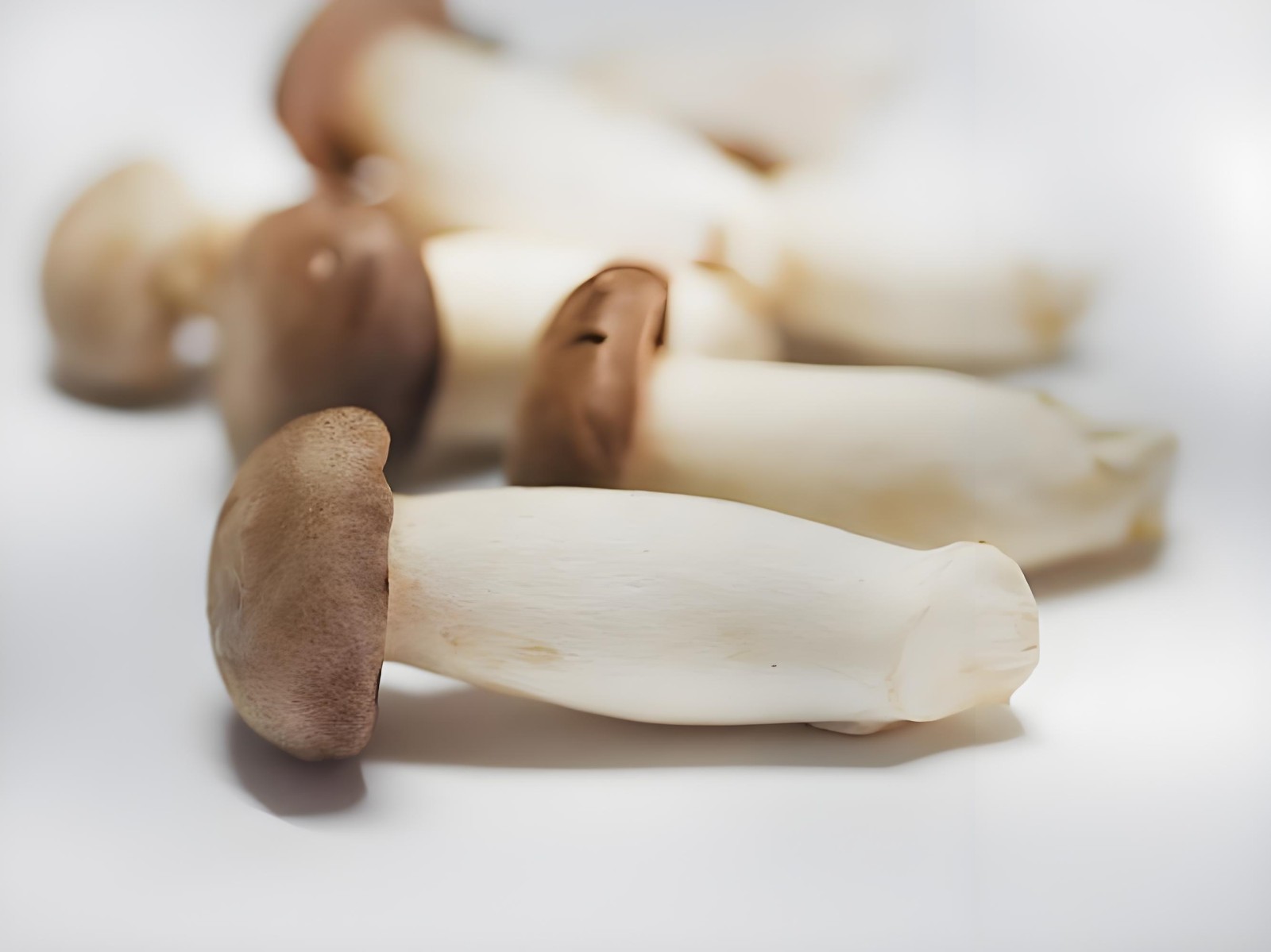
Pleurotus eryngii is a high-quality, thick-fleshed edible mushroom, naturally distributed in Southern Europe,
North Africa and Central Asia. It originally grows on the dead root of Eryngium plants.It features crisp texture,
dense and edible stipe, with a special almond and abalone flavor. It is also known as "King of Oyster Mushrooms".
It is rich in plant protein, crude fiber, carbohydrates, 18 kinds of amino acids, mineral elements and vitamins.Related
research in China started at the end of 1992. At present, Pleurotus eryngii has achieved industrial cultivation in Thailand,
the United States, Japan and other regions. It is widely planted in China with biological efficiency up to 80%.
1. Morphological Characteristics
Pleurotus eryngii consists of mycelium and fruiting body.Mycelium: white, fluffy, vigorous growth, obvious climbing
growth tendency.Fruiting body: medium size, growing singly or in clusters.Cap: 2–12 cm, pale yellow, changing from
pherical to flat.Stipe: smooth, nearly white, solid and fleshy with fine fiber texture.Gills: dense and decurrent; spores
are smooth, white and elliptical.
2. Life Cycle
The life cycle of Pleurotus eryngii follows: Spore → Mycelium → Fruiting Body → SporeUnder suitable conditions, spores
germinate into monokaryotic hyphae, then fuse into dikaryotic hyphae. The hyphae absorb water and decompose nutrients,
then develop into fruiting bodies. Mature fruiting bodies release spores to complete the cycle.
3. Cultivation & Nutrient RequirementsPleurotus eryngii can decompose cellulose and lignin efficiently; multiple agricultural
by-products can be used as culture medium.It makes good use of glucose, fructose, maltose and organic nitrogen sources such
as peptone, yeast extract and soybean meal.Low utilization of mannitol and inorganic nitrogen including ammonium nitrate,
ammonium sulfate, urea and potassium nitrate.Available raw materials: cottonseed hulls, corn cobs, wheat bran, corn flour, sawdust,
bagasse.Optimal carbon-nitrogen ratio: 30:1.Moderate nitrogen boosts mycelium growth and yield; excessive nitrogen will delay fruiting.






 Send Email
 WhatsApp