News
Shiitake Mushroom Spawn Production
Shiitake mushroom spawn production includes three procedures: mother culture cultivation, primary culture cultivation, and cultivation culture cultivation. The mother culture must be a superior strain that has undergone certain fruiting trials and been identified as such; it is a test-tube culture, also known as a first-generation culture. The primary culture is cultivated by propagating the mother culture and inoculating it into sawdust or granular culture medium; it is also known as a second-generation culture. The cultivation culture is produced by further propagating the primary culture into sawdust culture medium to meet the needs of large-scale production; it is also known as a third-generation culture. Each grower should plan and order their spawn in advance according to their actual production scale to avoid delays in the production cycle.
1. Spawn Isolation
Shiitake mushroom spawn isolation can be done using tissue isolation and spore isolation. Spore isolation is generally used for strain selection, while tissue isolation is more commonly used in production. The specific method of tissue isolation is described below.
(1) Preparation of equipment and culture medium: Scalpel or small knife, inoculation needle, alcohol lamp, cotton swabs, 75% alcohol, and potato dextrose agar (PDA) culture medium.
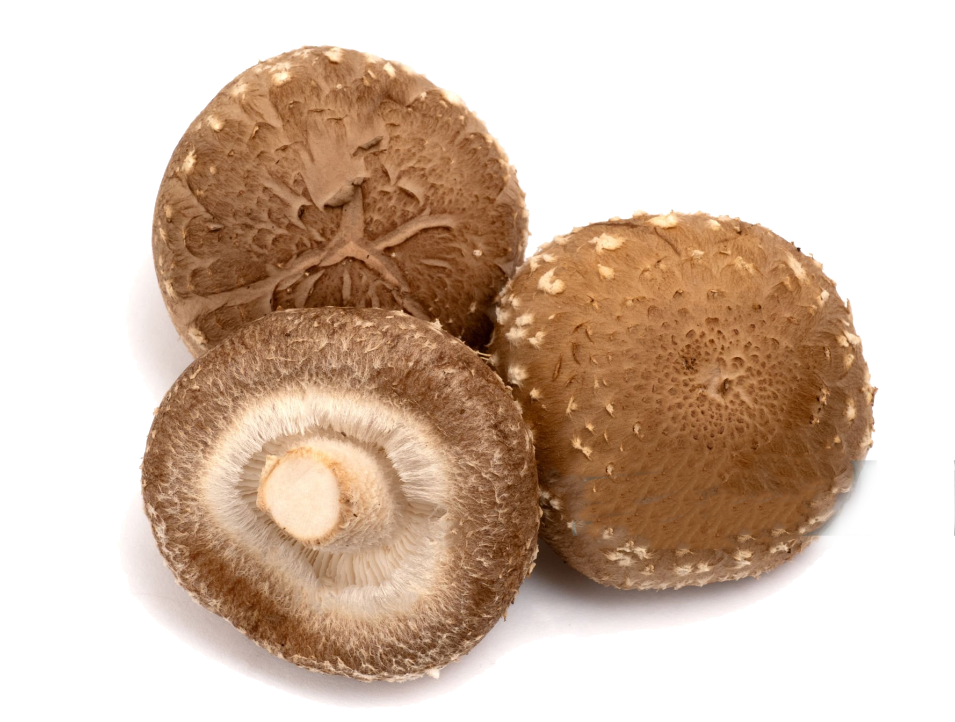
(2) Selection of fruiting bodies: Select fruiting bodies from mushroom logs with strong mycelial vitality, normal and dominant fruiting. Choose fresh mushroom fruiting bodies that are round and large, with thick flesh, short and thin stems, dark color, unopened caps, conforming to the variety characteristics, and 6-7 parts mature.
(3) Disinfection of fruiting bodies: Remove surface debris, cut off the culture medium part at the base of the stem, wipe and disinfect the surface of the fruiting body with 75% alcohol cotton swabs, then move the isolation equipment and culture medium into the inoculation box, and wait for isolation after routine disinfection.
(4) Isolation of tissue blocks: Using disinfected hands, tear the stem in half from the base upwards. Use a sharp knife to cut a piece of tissue from the upper part of the junction between the stem and the cap, then use an inoculation needle or forceps to transfer the cut tissue block to the inner part of the slanted culture medium. (5) Cultivation: Place the test tubes containing the inoculated tissue blocks in a constant temperature environment of 25-27°C for cultivation. Generally, after 48 hours, the tissue blocks begin to recover, and grayish-white mycelium grows around them, colonizing and spreading on the culture medium. When the mycelium grows to about 1-2 cm on the culture medium, select the test tubes with robust mycelium, cut the mycelium into small pieces with an inoculation tool, and transfer them to a new slant culture medium. After cultivation, this becomes the mother culture.
(6) Inspection: Mother culture quality inspection is a very necessary task. The mother cultures obtained by tissue isolation are all dikaryotic mycelium. Under a microscope, each cell of the mycelium has two nuclei, and there are clamp connections at the cell septa. The more clamp connections there are, the stronger the fruiting ability.
(7) Fruiting Test: The mother culture obtained by tissue isolation must be tested for normal fruiting before it can be used for large-scale application.



 Send Email
 WhatsApp